
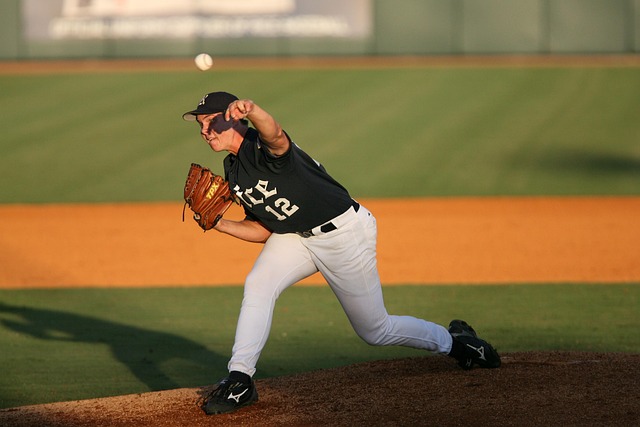
Control the controllables is great advice. It helps you stop wasting time on things you could never hope to impact, and redirects your energy to things within your reach. At times, the list of things within your control is very small. Your breath is sometimes the only thing within your control in life. The same is true for players on the field and coaches in the dugouts, especially in the big moments.
For baseball players, harnessing the power of their breath can be the difference between resilience during adversity on the field and imploding. This lesson became real for us when our oldest started pitching. Even early on, it was clear that he cared deeply about showing up for his team and helping them to win games. (I know that conventional wisdom says we shouldn’t focus on wins with young players, but try explaining that to the kids themselves.) There were times that his desire to do well became his undoing. The stress that he self-imposed on himself was immense. We had to find a way to help.
As a former pitcher, one of the things that my husband is best at is helping our boys to find perspective when it comes to that position in particular. It’s a special opportunity for him to share hard-fought lessons with his boys. And thankfully, dear reader, you’re here to catch a glimpse of those conversations to share with a player, use yourself if you are a player, or remember to impart to your team if you are lucky enough to be coaching currently.
One of the hardest things for a pitcher to do is stay cool when you have base runners on. But not all of those runs are attributable to you. That can be important to remember to help keep your cool in the moment that a runner reaches first on a dropped 3rd strike. Or when that same base runner makes it to 3rd because your catcher wasn’t able to throw him out on the other side for whatever reason. But the difference between walking the rest of the bases loaded, and retiring the remainder of the side to escape the inning, has everything to do with your mindset as the pitcher.
If you are focused on the injustice of the runner on first, you are more likely to balk and give him second. When adrenaline is pumping through your veins, like it does when you get angry or stressed, your muscles can become twitchy to a point that you have less control over them. When harnessed properly, the adrenaline of the game can become an asset that increases your focus on just the glove. When allowed to run amok, it can have you losing the zone and self-destructing faster than paper shoes in bad weather.
What Adrenaline Does to a Pitcher’s Body
What I’ve noticed with big league pitchers, and has been confirmed for me by my pitcher husband, is that your breath is one of the most valuable tools you have for moments like this. You can’t always shake the stress hormones out of your body, or smash them out, or scream them out. But when you can, I definitely recommend these tools when and where appropriate. Just don’t forget to make sure little ears are out of range if you plan on screaming expletives, and maybe your parents and coaches too, they might not love that either.
But your breath is really never “inappropriate”. If you learn how to use it, you can find your way through difficult emotions while maintaining control over your focus and all of the fine muscles in your body that are required to help you throw consistent strikes.
For me, this is “pranayama” or breath-work from the yogic tradition. I have been lucky to have had an at-home daily yoga practice for about a decade now. Through it, I have learned a great many tools for moving emotions through me instead of holding on to them, running away from them, or burying them. But for Brian, this is simple wisdom shared on the bench with other players and from years of working with great coaches.
A Masterclass in Breath-Work Happened on April 14th, 2026
A great example of using one’s breath to get un-rattled happened during the Yankee game last night, April 14th, 2026, against the Los Angeles Angels. After Mike Trout, Jo Adell, and Jorge Soler sent back-to-back-to-back home runs out against Yankees pitcher Ryan Weathers in the top of the first inning, Weathers used his breath to regain his clarity and battle back to get out of the inning. He was clearly frustrated and Skipper Aaron Boone and catcher Austin Wells both took a visit to the mound to give him a couple of seconds of support. But the lion’s share of the work of dealing with the adrenaline, cortisol, and other stress hormones that were certainly spiking in his body, was his to do. And boy did he do it.
With only one out prior to the 3 runs, he still had 2 to get. Weathers walked the very next batter while he continued to take deep breaths that you could see him blowing out powerfully. Like he was trying to blow out a birthday candle. This is a technique that is used in pranayama too, a great video showing it from my favorite YouTube Yogi Adriene Mishler can be found here (bonus: this also has her “knocking on heaven’s door” kundalini technique which is one of my favorites when I need a quick release of frustration or to energize me in the middle of the day. Maybe not the best for on the mound though). To end the inning, Weathers was able to get Logan O’Hoppe to pop out to Judge in right, then strike out Yoán Moncada for the final out of the inning. All of which is attributable to his ability to work through the pressure he was under. Much of which was visibly aided by breath-work.
Weathers managed to go 5 innings and log 10 strikeouts and give up only 2 walks. He also gave up 5 earned runs, 3 of which came so quickly, they could have ended his outing in the first inning. Actually, Reid Detmers, the winning pitcher for the Angels, managed to log fewer strikeouts in the game than his opposing pitcher, wild, right? Clearly, the Yankees didn’t do much to support their starter. With only 5 hits and one run scored, they didn’t even earn back what Weathers lost in the first inning. Which certainly is not always the case. But even with the lack of production from teammates, a pitcher has one job, to keep throwing strikes. Even when you’re down. Even when you’re stressed. It’s a tall order that requires training that extends beyond just the fundamentals of the mechanics of pitching.
To see it for yourself, search the Angels vs. Yankees game from April 14th, 2026 on MLB.com and watch their 10-minute recap. There, you’ll be able to catch at least a few of the times that Weathers used his breath to ground himself. But make sure you watch other Major League pitchers under pressure and look for how they use their breath to keep their composure. You won’t believe how much you’ll see it once you know what you are looking for.
Last night was a masterclass in managing the pressure of the job of being a pitcher by controlling the controllables. Weathers couldn’t do anything to control the production of the Yankees bats. He couldn’t change the fact that he had given up three runs in the first. What he could control was his response to the situation, through his breath. To tell his nervous system that he was alright. That there wasn’t a saber tooth tiger coming for him. That he was doing the thing that he knew how to do after tens of thousands of hours logged doing it. He could get out of his head and back into his body and focus on the next batter.
Presence Is a Performance Skill
Staying present in the moment is a secret weapon for elite athletes and anyone who wants to be great at anything. While it sounds simple, it’s not easy. Our minds are taking in so much information every second and filtering it all through the lens of our experience. This colors our view of the world. And sadly, can lead us to believe limiting beliefs about ourselves that hold us back and have us self-sabotaging instead of building resilience.
This Applies to Coaches Too
The same principle of controlling what you can control applies beyond the mound. As coaches, the big moments can get our adrenaline pumping too. This is the moment for us to return to our own breath. But too often, we allow our stress hormones to control our decisions without our awareness. This leads to yelling at the player that made a mistake, or pushing a player beyond their capacity without realizing what we are asking of them because we want the win so badly. Even if we want the win for the right reasons, for the players, we still can lose sight of what is best for our players when stress hijacks our systems if we aren’t using our breath to bring us back home to our true selves.
Breath-work is a critical part of the emotional and body level intelligence that players need to succeed at high levels. We have identified 8 such areas of focus that support the complete development of a baseball player. Take a look at it below, would you agree that they are all important? Sound off in the comments with your thoughts.
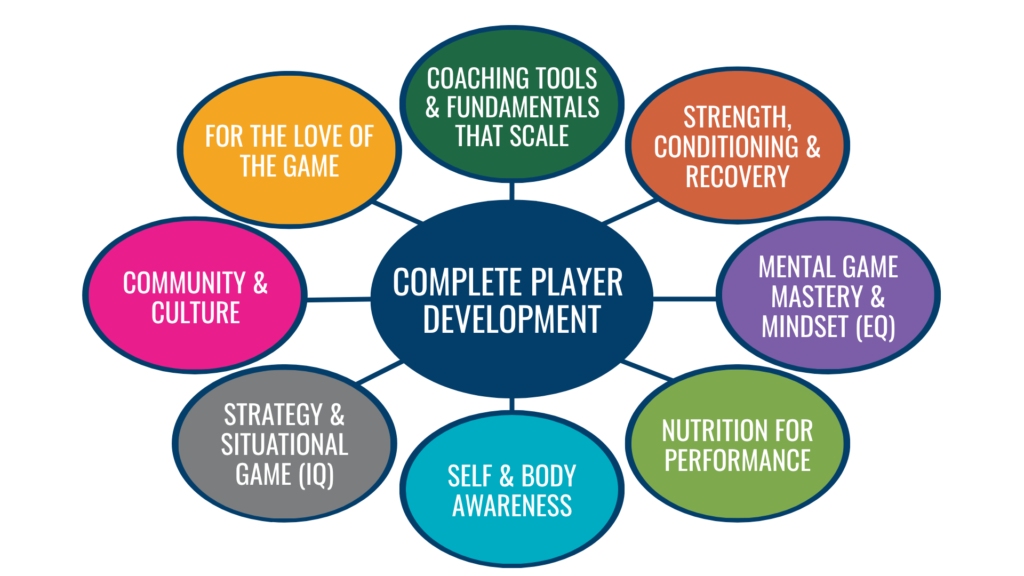
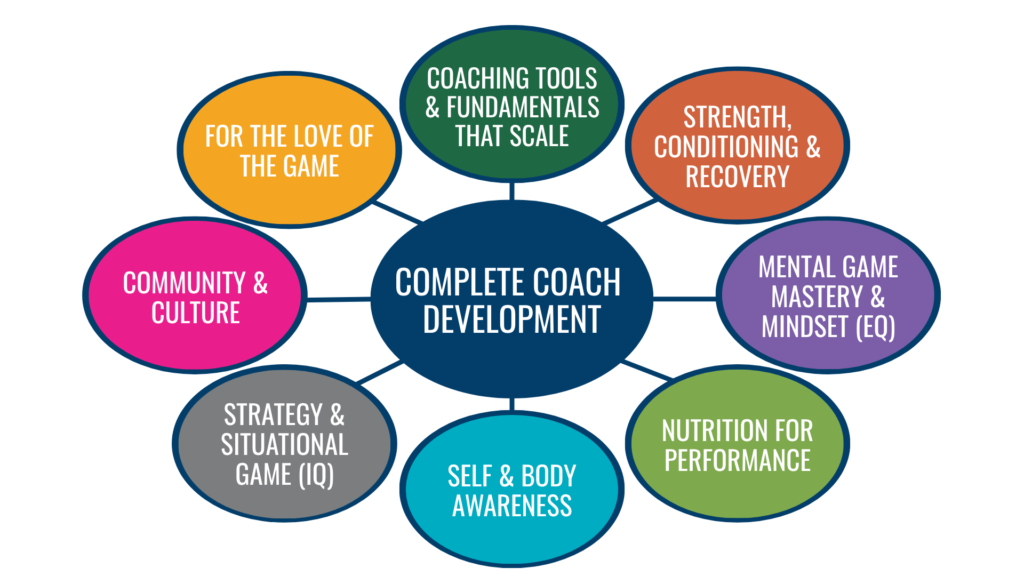
When we looked at this, it struck us that these same 8 areas are integral to complete coach development too. Look at the infographic with just the center changed out, still totally applies right? Maybe each area is getting a different amount of focus for a coach compared to a player, but still, they all definitely apply in our estimation.
We’re building out this blog to support better coaching for better player development. But that means that we are looking for coaches that are looking to develop themselves in the process too – because you need to put the oxygen mask on yourself first if you are hoping to make the most impact helping others. We hope you’ll subscribe to our newsletter and share your thoughts on these posts so we can engage in these topics further and gain insights into what you are seeking support with next.
Until next time, don’t forget to breathe,






Trackbacks/Pingbacks