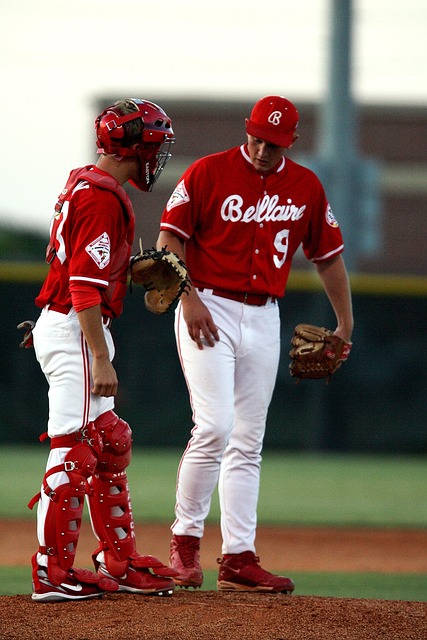
I know you didn’t start catching to be the start of the show. But when your pitcher needs you, you need to know how to actually help when making a mound visit, and yes that means you will need to put yourself in the spotlight a little bit.
As a former catcher myself, I remember how uncomfortable I felt making a mound visit. I struggled to know when I needed to do it, when it would be okay with my coach, and how much was too much for my pitchers.
There are so many resources that you can find these days about how to get better at the actual work of being a catcher: blocking, pop-time, throw-downs, you name it. And there are definitely things you need to know about covering during plays on the field that you are hopefully working on with your coach and team in practices. Nobody really talks about what to do when you walk out to the mound. So, let’s dig into that today, shall we?
When to Make a Mound Visit
Whether you are in little league, high school ball, or travel ball, you will catch for a pitcher that is struggling. Here are a few signs that it’s time for you to give them a quick breather:
- They haven’t found the zone yet and are a few batters deep
- They just walked the last two batters (and not on questionable calls)
- They look frustrated, exhausted, or stressed
- They just walked in a run
- They’re suddenly launching over your head or bouncing the ball before the plate
- You threw a few back to them that made them work too hard
- Something feels “off” (expert level)
Variations on the Mound Visit to Use:
Ideally, you will have strategies and tools that you can use in various different circumstances with your different pitchers. They won’t all need the same thing.
Not all of these will call for a full mound visit where you are pulling in your infield and huddling up on the mound. Sometimes, just focusing on you and your pitcher is all you need to do. Keep it simple when you can.
The slow walk:
Even simply slowly walking the ball all the way up to the mound, while keeping an eye on any runners on base (especially if no one is at 3rd), can be enough time to calm down after a rough moment. You don’t have to say anything. Just a deep breath and a slow walk back for them to reset can be just what they need when they find themselves rushing their mechanics because of the adrenaline of the moment.
Make it yours:
Your execution of these strategies is unique to you. You’ll want to do them in ways that feel right. If you aren’t the funny one in the dugout, trying out jokes on your mound visit might not work out so well. It’s okay to sincerely talk to your pitcher and tell them you believe in them too, actually, many pitchers will respond to “you’ve got this” just as great as a joke about crop dusting the umpire (like Swagnshades here – love his content). Clearly, I’m more of the sincere “I believe in you” catcher. That also translates into the parent, coach, and leader I am too. Whichever you are, lean into your gifts.
As a ball player, self-awareness is important. As a catcher, it’s even more important. But catchers also need to read others well. Especially your pitchers. Which gets easier as you play more games together and have more of an understanding of how they tick.
Pro-tip: Before the game, ask your pitcher how they are doing. And mean it. Not small talk. Actually listen. Make sure they know you expect an honest answer.
As you advance in your role, you will need to read runners and batters better too. You’ll be doing a whole lot of homework on your opponents to make sure you are calling a great game for your pitcher. It’s a lot of behind the scenes work to get to greatness as a catcher for sure.
I’m working on an article about calling a game before you have scouting data. I’ll link it here once it’s ready. If you’re a catcher and love these insights, I would love it if you subscribed to our newsletter. You would get an email when the article dropped too – bonus!
How to Help Slow Things Down for Your Pitcher
If you’re feeling like your pitcher needs a few seconds, here are some options to choose from:
- Full mound visit – reserve for big moments where you have a chance to win – usually this includes the infield because of something you want to execute – use sparingly and check if there are any league limits to these
- Mini-chat with your pitcher – ask the umpire for time and remove your mask and walk up to the mound and hand the pitcher the ball.
- If you have seen something that is happening in their mechanics that they have been working on, share it, your perspective can be invaluable (especially for those pitchers who also catch).
- If not, ask them if they need anything from you, or make a joke, or reassure them briefly.
- Slow-walk the ball back – great for moments where the ball got thrown around already – slow it down, add in some encouragement, and reset together.
How to Feel More Confident with Mound Visits
Practice them
The more visits you make, the easier they are. You will mess up and do too much, it’s okay, learn from it and keep going.
Talk to your coach
They will have opinions on frequency and duration. Work together to make a plan to best support your pitching staff.
Bonus: gives you the chance to show how much you think about the success of the team and are trying to do the work to uplift everyone. Great visibility move.
Want to go above and beyond? Get all of the catchers in on that coach conversation after the initial chat. Make sure you all are on the same page and working to get better together. That will really show that you are there for the team and not just yourself. Then keep working on your individual skills to earn your starting role. But when you have a day off, your team will thank you.
Keep it quick
Taking too long will frustrate your umpires, coaches, fellow players, and everyone watching. So, you do need to make sure you are not taking too much time with whatever you are doing.
This might be the easiest part though. Because you didn’t get into catching to be the star of the show. You would be the one on the mound if you wanted that.
Try not to rush too hard either though. Your grounded presence is important for your pitcher. Even if you have been chasing balls like a golden retriever, you need to be calm. And if you have been working hard back there, taking the time to stand up for a few minutes will do you some good too. You can feel free to blame your knees, hips, ankles, or anything else for the mound visit. No need to shame your pitcher. They aren’t trying to throw wild pitches. But you can enjoy a few seconds of calm before diving back in there too.
Cover your mouth with your glove
I know this isn’t game 1 of the world series, but practicing this skill now is important. Don’t let the other team know what you’re saying. Cover your mouth with your glove throughout your chat.
The mystery adds to your perceived competence. In other words, if they think you have sage wisdom that you’re sharing, they’re going to think you know more than you might. Which will make them hesitate on the base paths. Which is a good thing for you!
They don’t need to know that you just asked them if the first base umpires moustache looks more like Mario or Luigi. And when your pitcher, refreshed, starts throwing strikes again, it won’t matter to your coach either as long as it works.
What to do if Your Pitcher Waves You Off
Don’t take it personally. Especially if you don’t know them well yet, they may not be interested in much support from you. That’s okay. You showed up and did your job. That’s all that matters.
Each of your pitchers will respond differently to stress and to mound visits. As you learn their styles, you can tailor your visits to them. And if that visit is just for you, just say so. “Whew, I’m sweating back there, thanks for taking a second so I could breathe”, or something similar can help stop any potential animosity from forming if they have already brushed you off in the past.
What to do if This Sounds Terrifying
If that sounds awful, I would suggest finding a new position.
I know that might sound harsh, but catching is a relatively thankless job. It requires significant physical, mental, and emotional discipline. But the rewards are plentiful if you can navigate the complexity.
Getting good at mound visits is an important part of becoming the catcher your team needs. I hope this has helped you to think further about how you will use this in your game. Anything I missed? Any questions you still have? Let us know in the comments.
Until next time, you’ve got this catch,