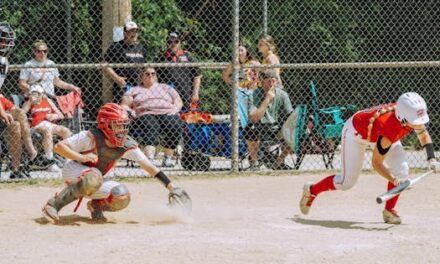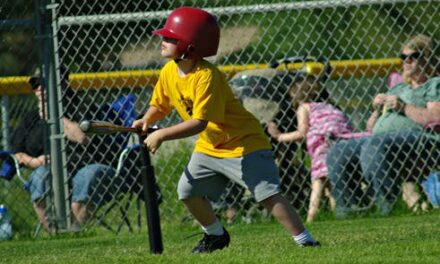
Coach, in case nobody else has told you lately, you should be conditioning yourself too.
Yes, I know. You are worried about your players being ready for the sport they are playing. You’re thinking about their reps, their endurance, their focus, their mechanics, their confidence, the preparation that you are making sure they get before gametime.
All of that matters.
But you matter too.
And if you are coaching youth baseball, or really any youth sport, your body is part of the job whether you planned for that or not.
Coaching Is More Physical Than We Admit
I think a lot of coaches forget how much they are asking of their own bodies during a season.
You are standing for hours, demonstrating drills, throwing batting practice, catching bullpens, chasing balls, carrying equipment, kneeling down to talk to a player, getting up again, twisting, reaching, bending, and reacting to whatever joyful chaos happens next.
That is not nothing.
It may not feel like “training” because you are focused on the kids, but your body does not know the difference between planned exercise and surprise catching duties after a full day at a desk.
Ask me how I know.
Actually, don’t. I will tell you anyway.
I Made This Mistake
I made the mistake of assuming I could go from sitting at my desk all day straight into coaching practices and games without doing much to prepare my own body.
No stretching. No warmup. No real conditioning plan.
Just work all day, show up to the field, get down to catch bullpens, move around, demonstrate things, and hope my body would keep cooperating because I had good intentions.
Spoiler alert: good intentions do not count as mobility work.
Now I am nursing a hip injury. And no, it is not only because I was coaching. But coaching absolutely played a role because I was asking my body to do things it was not properly prepared to do.
That is the part I want other coaches to hear.
This comes from lived experience, and unfortunately, I did not do it the right way the first time.
Maybe you can.
Your Players Are Watching How You Move
As coaches, we talk to players all the time about preparation.
Warm up before you throw. Stretch. Build strength. Recover. Don’t rush. Listen to your body.
Then we turn around and show up stiff, tired, under-conditioned, and running on caffeine and dreams.
The kids notice.
They may not say it out loud, but they notice how we treat our own bodies. They notice whether movement is something we value or something we only demand from them.
That matters because coaching is leadership, and leadership is more about what we model than what we say.
If we want players to understand that long-term health matters, we have to act like ours does too.
Desk Jobs and Coaching Don’t Always Play Nicely Together
A lot of youth coaches are also parents, volunteers, and full-time workers. Many of us spend most of the day sitting at a desk, in a car, or in meetings before we ever make it to the field.
If you have a desk job, your body probably needs extra preparation before coaching. Not because you are old. Not because you are broken. Because your daily life may not be giving you the movement variety you need to coach well without paying for it later.
A little stretching, strength work, and mobility work matters.
Getting into the gym, taking walks, doing yoga, working on your hips and other joints, warming up before practice, all of it can help.
You do not have to train like a professional athlete.
You just have to be ready for what you are about to ask your body to do.
Protect Yourself Like You Protect Your Players
We would never tell a young pitcher to throw without warming up.
We would never want a catcher getting down over and over without caring about their legs, hips, back, or recovery.
We would never tell a player that their pain does not matter if we are trying to build something healthy and sustainable.
So why do coaches treat themselves that way?
Your players need you.
Your family needs you.
And you deserve to make it through the season without your body sending you an angry little newsletter every morning.
Protecting yourself is not selfish. It is part of being able to keep showing up.
This Is Part of the Strike Sports Vision
This is one of the reasons I think so much about the kind of facility we want to build at Strike Sports.
Yes, we want players to get better reps.
Yes, we want coaches to have better tools.
Yes, we want families to have access to resources that help them support their athletes.
But we also want adults to move too.
Parents, coaches, siblings, grandparents, former players. People who love the game but have been sitting on the sidelines for too long.
We want a space where movement is built into the culture – never an afterthought. A place where players train, family members work out, coaches prepare their bodies, and everyone gets to reconnect with the joy of moving together.
Because youth sports could help the whole community to get healthier if we put a little more intention behind how we move.
Congratulations, Coach
So, if you are heading into a new season, congratulations, coach! I hope it is fantastic.
I hope your players grow. I hope they get stronger. I hope they learn something that stays with them long after the season ends. But I also hope you protect yourself.
Stretch before practice. Build some strength where you can. Take your own recovery seriously.
Condition your body for the work you are doing, just like you ask your players to do for theirs.
You are part of the team too.