

So, your team has decided to create team trading cards to commemorate this moment of your player’s life. Congratulations! You are about to get a keepsake you, your player, and your family will surely treasure.
Now, the only thing standing between you and that trading card is selecting a photo. Here’s everything you need to know to pick the perfect photo for a trading card you’ll all love.
1. Do we need a professional photographer?
No. We made sure to design our cards around photos uploaded from cell phones. Because we’re parents too and we know that most of us are taking at least one or two pictures of our kiddos during games throughout the season.
Not every phone has good enough resolution on the camera to work, so please use your best judgement. (If your iPhone still has a home button – you might want to ask another parent for support getting a higher quality image). The card format forgives a lot. What it does not forgive is a blurry, dark, or heavily cropped images (due to being taken from too far away), and all three of those are avoidable.
2. What if we already have media day photos?
If your team had a media day and you have that photo, use it, it’s genuinely the easiest option and usually the best lit. A professional team photo day typically already solves your three biggest variables: even lighting, a clean background, and a consistent pose across the whole roster. If you have access to the individual, uncropped version of your kid’s photo rather than the final printed composite, that’s the one to upload. That shot gives us more to work with than a photo that’s already been cropped.
Staging Photo Advice:
3. What if I didn’t take any pictures during games and we didn’t do a media day?
Time to get creative! Get your player in their uniform and ask for their thoughts on how they would like to be pictured on their card. Think of the sports equipment you could use and how they could show themselves using it like they might during a game. Use those props to take a few photos. Have fun with it. Allow them to be silly, serious, or whatever feels right to them. And then pick the one you like best.
4. What background actually works best?
The plainest wall in your house is better than the most scenic spot in your backyard. A solid-colored wall, a garage door, a bedsheet taped up if you’re committed, anything without clutter, patterns, or other people walking through the frame. You do not need to agonize over this. Background removal technology has gotten good enough that a clean, evenly lit background gives our editing tools an easy job. And even though a busy or shadowed background gives them a harder job, they usually can make most any photo work.
5. Do we need good lighting equipment?
No. Natural light does the heavy lifting. Face your kid toward a window or stand outside in open shade, think under a porch roof or near a tree line, rather than in direct sun. Direct overhead sunlight creates harsh shadows under the eyes and cap brim that are hard to fix after the fact. Overcast days are secretly the best lighting you’ll get all year. Skip the flash entirely if you can; it flattens the uniform colors and creates glare off any plastic or metal on the gear.
6. How should we frame the shot?
There’s really no wrong answer here, other than maybe them facing away from the camera entirely. You could choose a close up that focuses on them from the waist up, facing the camera, jersey number and team logo visible. Or you could have them pretend to do something from the sport – like swing the bat, field a ball, do the split jump, you get the idea. You can draw inspiration from any of the sports photographers that share their photos on social media too. But don’t worry about overcomplicating things for yourself.
If they’re wearing a cap, make sure the brim isn’t casting a shadow over their eyes, tilt it back slightly if needed. Having some room to crop is good for us too. But just don’t take the photo from too far away. A good rule: if you can read the jersey number clearly without zooming in on the photo first, you’ve got enough resolution and the right framing.
7. What resolution or file size should we upload?
Bigger is better, in the case of photos. Upload the original file straight from your phone or camera, not a screenshot, not a photo of a photo, and not something that’s already been through three filters and text message compression. If the image looks sharp and detailed when you zoom in on your own screen, it’ll hold up on the card.
8. What are the most common mistakes to avoid?
Sunglasses or hats that shadow the face. Photos taken from far across a field and digitally zoomed in, which creates pixelation you can’t undo. Heavily filtered or edited photos where skin tones or colors look unnatural.
And the quiet one nobody thinks about: motion blur from an action shot. If it’s the best moment you were able to capture, but it’s too blurry, it won’t print well. You can try to stage it indoors though. Get creative with pillows, gym mats, and assistance from siblings to make it happen. Either way, the card wants a clear photo more than anything else.
9. What if our photo isn’t perfect?
Send it anyway and ask us. Most photos that feel “not quite right” to a parent are still completely usable. We’d rather look at what you have and tell you honestly if it needs a retake than have you sit on a good photo because you’re second-guessing it.
Quick Checklist Before You Upload
- Plain background, no clutter, no people walking through
- Natural light, no direct overhead sun, no flash
- Full-size original file, not a screenshot or a text message download
- Sharp and clear photo, not blurry from movement
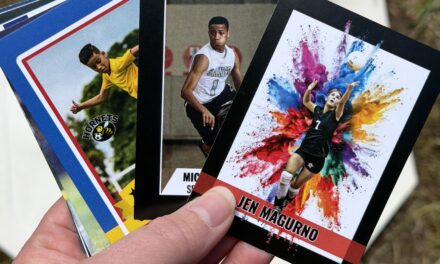
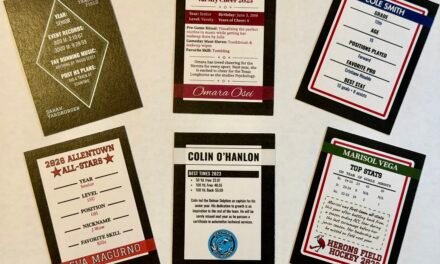
Whether or not you have professional photos, you can still capture the season with team trading cards by Strike Sports. We look forward to serving your organization season after season and helping you build a collection of memories from your player’s time on every team.
Worried that parents won’t want to take pictures themselves? Here are some alternatives that will still allow you to get great custom trading card photos.




Trackbacks/Pingbacks