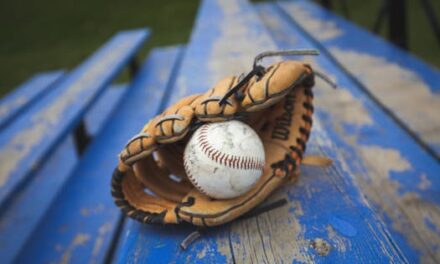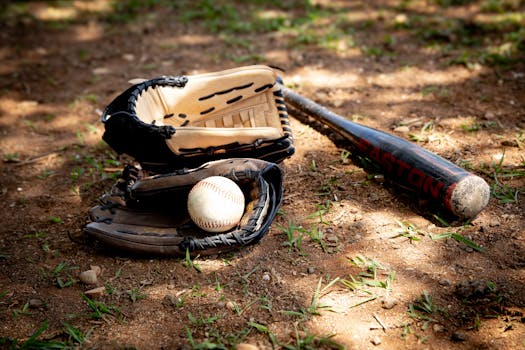
Before you head out to buy junior his first glove, know that not all gloves are created equal. No, this isn’t an ad for some expensive glove brand. I’m talking about a phenomenon that I have lovingly dubbed “plastic glove syndrome”.
I first saw it as an 8U coach a few years ago. I had a player who was doing really well seeing the ball into his glove, yet for some reason, he couldn’t seem to keep a grip on the ball.
I kept observing this player and others with similar issues looking for patterns between them. Was it something in the way they were turning their glove? Were their gloves just too new and not broken in enough to squeeze the ball? Were they not even trying to squeeze the glove? Did they know they needed to?
The answer came after asking one of the players if I could use his glove for a game of catch one practice. The shiny inside should have been a dead giveaway, but since I can fit myself into kids gear, I decided that I would work with the glove to determine what was going on. I slid on the glove and threw a ball to my husband. When he threw it back, I squeezed and the ball rattled around in the glove, sliding all over the place.
After a few back-and-forths, I got more accustomed to the slippery inner surface and was starting to more casually catch the ball with less thought in the way I was squeezing it shut. That’s when the issues started coming up. I couldn’t keep the ball inside the glove. Just moving it to meet my ungloved hand resulted in the ball flying out of the mitt. After a few grounders, it was clear that this shiny, almost plastic-like, surface was an issue.
After asking for permission, my husband and I got to work on the glove trying everything we could to break it in. We molded, we folded, we crushed and massaged the center. We couldn’t make a dent in it – literally! It kept bouncing back. The entirety of the inside of the glove, pocket, palm, and web included was coated in what I was certain was plastic.
So, like any good researcher, I left practice that day and started searching what was going on here. There had to be others that had noticed what I had. But here’s the thing, there was little discussion online of the harms of these types of gloves. On the contrary, I found a great deal of articles talking about synthetic materials and how they were helping to make gloves better and more water resistant.
I’m all for modern convenience in most moments, but we have to draw a line somewhere. That glove, being lined with plastic, is being done because there are likely thousands of gloves (or more) that have met the same sad ending after being caught in the rain out in the lawn.
But, do we really need our gloves lined with plastic? We are of the opinion that no, your child doesn’t need the plastic lined glove. Specifically, because it is going to limit their ability to catch and field the ball. And that is a recipe for quitting baseball early before they get to fall in love with the game. That is not what we are looking for as coaches.
I saw some trends, many of these gloves were self-reported to have been purchased at a big box store of some variety, like Walmart, not a sporting good’s store. There are definitely gloves at those places that don’t have the plastic coating, but you have to know what you are looking for.
These seem to be less prevalent at a place like Dick’s Sporting Goods (not sponsored, but holler at your girl Dick’s! Wait, what? That sounded different than I expected haha).
How to Check Any Glove Before You Buy
Here’s what you should be looking out for: Check the palm of the glove and feel the material. Does it feel like leather? Or something similar? Does it have pores? Does it crease a little when you close it? Great! That’s exactly what you want. You won’t be able to break in a glove with grease if it isn’t somewhat porous.
If the glove feels tight and difficult to squeeze, there are a million different kits that exist now to condition and break in your glove. It’s far more fancy these days than it used to be. I remember breaking in my first catcher’s mitt with glove oil, shoe polish, and wrapping a ball in it with twine around it and sitting on it on the couch for weeks leading into the season. There was so much massaging and tossing the ball into it and catches with sore hands before it was ready. That broken-in state was hard earned.
These days, that level of dedication isn’t needed. Especially since some of the pricier gloves come pre-broken in. This one that I recently got was so easy to break in, I never had to do anything more than have a few catches with it and it was ready to roll. Seriously, no breaking in services needed (although those do exist if you want to spend the money on them).
Actually, that glove was so nice, my oldest ended up with one of his own when it was time to get him a bigger glove. His is a little different than mine, so we can thankfully tell them apart, although, his break-in has already far surpassed mine. He’s putting miles on that little guy already!
While many websites will tell you that these synthetic gloves are great for first gloves for younger players due to their lightweight and inexpensive materials, not all of them are created equal.
When Equipment Becomes a Confidence Problem
We found that some of these synthetic gloves really never broke in. Players ended up frustrated with themselves for entire seasons. They believed they were less capable than they really were. What we believe is important. We act in alignment with what we believe is true and possible. Our beliefs create self-fulfilling prophecies, for better or worse. So anytime I see one of these “plastic glove syndrome” players, I’m sure to talk to their parents about what might be at the root cause of the issues they are having fielding and catching. Especially for players that are watching the ball the whole way to the glove and getting it right in the pocket only for it to pop out at the last second and make it look like a non-catch.
If your player is consistently dropping throws or missing ground balls or pop-ups, this is your sign to go check the inside of their glove. You might not need those private lessons just yet; you might just need to get them a new glove.
Now go have some fun and break in that glove!