I’m going to hold your hand when I say this, because I know it can be a hard thing to receive when you are still hurting: the person who did you wrong probably believed they were doing the right thing in the moment they did it.
That does not make the hurt disappear. It does not mean you deserved what happened, and it definitely does not mean you have to pretend it was fine, excuse behavior that caused harm, or skip over the real work of processing what it did to you. But sometimes, when we can remember that most people are not walking around with a villain cape tucked into their backpack, it gives us just enough room to breathe. It creates a small opening where empathy can enter, and sometimes that little opening is the beginning of repair.
Here is the thing about being human: we mess up. We make decisions with limited information, we react from old wounds, we protect ourselves poorly, we misunderstand, we assume, and we say the thing too sharply, or we stay quiet when we should have spoken up. We choose from fear, pride, exhaustion, insecurity, or the desperate hope that we are doing the best thing with what we have at the time.
And then other people have to live with the impact of those choices. That part matters too.
Good intentions do not erase harm. I think that is where a lot of people get stuck. Someone says, “But I didn’t mean it that way,” and expects that to be enough. It isn’t. If I step on your foot, whether I meant to or not, your foot still hurts. Repair does not come from insisting I had no intention of hurting you. Repair comes from noticing that you are hurt, caring that you are hurt, and being willing to change how I move next time.
That is the space I am most interested in. Not perfection. Repair.
Community Requires Rupture and Repair
We talk about community as if it is this soft, cozy thing where everyone agrees all the time and nobody ever disappoints anyone. But that is not real community. That is a nice idea on a mug.
Real community includes rupture. It includes awkward conversations, misunderstandings, bad timing, hurt feelings, and moments when someone says the wrong thing. It includes the times when a coach handles something poorly, a parent reacts too quickly, a kid gets embarrassed, or a leader realizes they made a decision that did not land the way they hoped.
If you are going to spend enough time with other human beings, you are going to mess up. They are going to mess up too. It is inevitable. We are perfectly imperfect little chaos noodles trying to build lives, families, teams, businesses, friendships, and communities with other perfectly imperfect chaos noodles. Of course things are going to get bumpy sometimes.
The question is not whether rupture will happen. The question is whether we will know what to do with it when it does.
That is something I think about a lot as we build Strike Sports. We are not just building a future facility. We are building the foundation for a community, and I want that foundation to be strong enough to hold real people with histories, sensitivities, hopes, blind spots, and bad days.
I want a community where people can have hard conversations without immediately being discarded. I want a place where accountability does not feel like punishment, and forgiveness does not require pretending something did not happen. I want kids to see adults model what it looks like to repair. I want coaches, parents, players, employees, and everyone who eventually walks through our doors to understand that mistakes are not the end of belonging.
They are part of the work of belonging.
The Reason Pencils Have Erasers
As we build this, I know there will be moments when we get it wrong. Someone will feel misunderstood. A decision will land differently than we intended. A coach will need support, a parent will need to be heard, an employee will need clarity, or a player will need someone to notice that something did not feel right.
And yes, sometimes it will get uncomfortable. Good.
That does not mean something has gone wrong. It means we are dealing with real humans in real relationships.
I think one of the mistakes we make in families, teams, workplaces, and communities is believing discomfort is a sign that something is broken beyond repair. Sometimes discomfort is just the doorway into a better version of the relationship. Sometimes it shows us where the weak spot is so we can reinforce it.
We are going to make repair attempts poorly sometimes. We are also going to make them beautifully other times. That is life. That is leadership. That is parenting. That is coaching. That is every team that has ever tried to become something more than a group of people wearing the same color shirt.
The goal cannot be to never mess up. The goal has to be to care enough to come back and try to make it right.
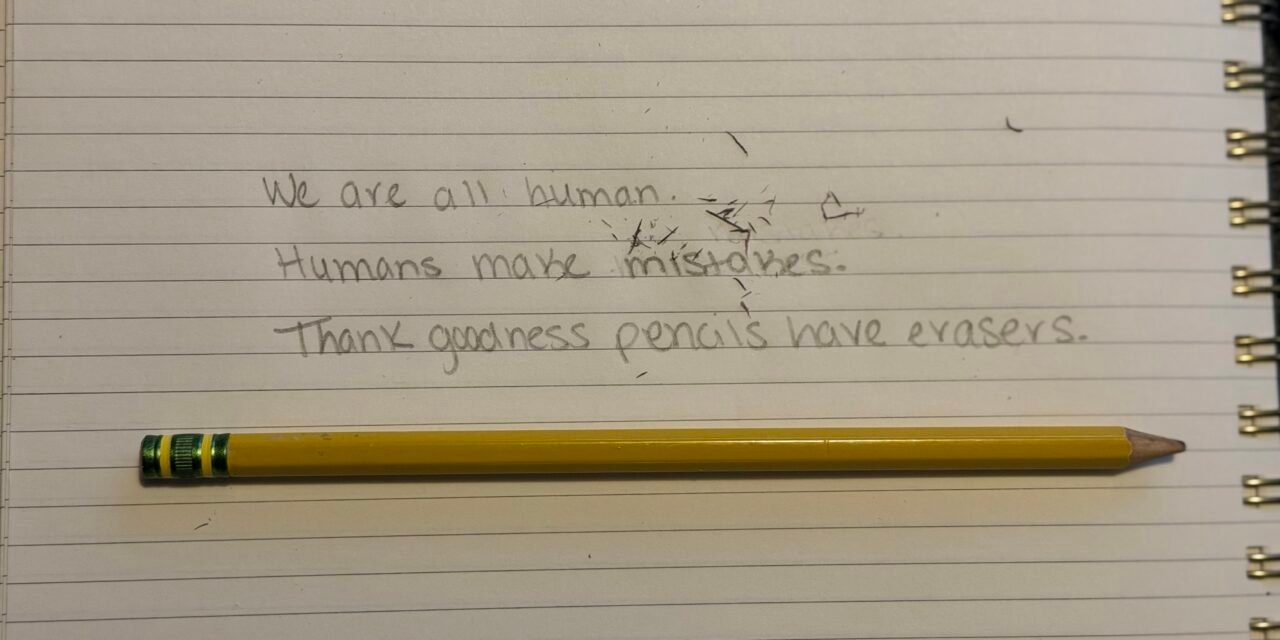
That is the reason pencils have erasers.
We give children pencils with erasers because we expect them to make mistakes while they are learning. We do not hand them permanent markers on day one and say, “Good luck, kid. Hope you never mess up.” We know learning requires correction. We know mistakes are part of how they understand what they are doing.
And yet, somewhere along the way, we stop extending that same grace to ourselves and each other. We expect adults to always know better. We expect coaches to always say it right. We expect parents to always regulate perfectly. We expect leaders to never miss something. We expect community to function without friction.
That is not how learning works. And it is definitely not how people work.
One of the hardest parts of being hurt is that our brains like to build a story around the person who hurt us. Sometimes that story keeps us safe. Sometimes it keeps us stuck. There is value in remembering that a person can be responsible for harm and still be more than the worst moment we experienced with them.
What This Has to Do With Youth Sports
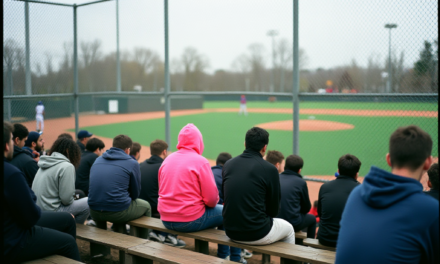
This matters deeply in youth sports, because fields are emotional places.
Parents care, coaches care, kids care. Everyone is tired, busy, carrying something from somewhere else. Add competition, playing time, pressure, money, expectations, and the wild little tornado that is watching your child struggle in public, and it makes perfect sense that people sometimes lose their footing.
A coach may make a decision a parent does not understand. A parent may say something from the sideline that lands badly. A player may feel embarrassed by feedback. A volunteer may feel unappreciated. A teammate may hurt another kid’s feelings without fully understanding what they did.
These moments happen. What I care about is what happens next.
Do we gossip? Do we villainize? Do we avoid? Do we leave every relationship fractured because nobody knows how to come back to the table?
Or do we learn how to have repair conversations?
That is one of the cultural pieces I want Strike Sports to stand for. I want our future facility and our broader community to be a place where people can learn not only how to hit, throw, catch, pitch, and run, but also how to be in community with one another. How to apologize, how to listen, how to ask what happened instead of assuming the worst.
I want kids to see that strong relationships are not the ones where nothing ever breaks. Strong relationships are the ones where people learn how to repair.
The Community We Are Trying to Build
Forgiveness is one of those words that can get weaponized when people use it to rush someone out of their pain. That is not what I mean. You are allowed to be hurt. You are allowed to need time. You are allowed to have boundaries. You are allowed to decide that a relationship is not healthy for you anymore.
But I do believe forgiveness, when it is real and not forced, can become a gift we give ourselves. It can be a way of setting down the version of the story that keeps us trapped in the moment we were hurt. Forgiveness does not always mean reconciliation or access. Sometimes forgiveness just means we stop letting the wound be the only narrator.
So the next time you are thinking about someone who did you wrong, whether it happened at work, inside a league, in a friendship, or anywhere else life hands us other humans to bump into, maybe ask yourself this: Does it help to imagine that they thought they were doing the best they could with what they had at the time? Does it create even a tiny bit more empathy? Does it help you loosen your grip on the story just enough to breathe?
Maybe it does. Maybe it does not yet. That is okay too. But I hope, when you are ready, it helps you remember that rupture is not always the end of the story. Sometimes it is the place where the real work begins.