Not every player seeking more reps should be rushing to their nearest travel ball tryout. But that does seem to be the only salve we have for players looking for more these days.
But it shouldn’t be that way.
Travel baseball is not for the faint of heart. Depending on what team and what level you are looking at playing, the pace can be relentless. With games that require overnight stays to be ready for, and even plane rides to get there, it’s a huge time commitment for the whole family.
Not to mention a money suck.
Most Younger Players Don’t Need More Games
The travel baseball model works for the players that are ready for more competition. For the ones that have outgrown their own sandlot.
But these days it’s treated like a panacea. A cure-all for every deficit of the local little league or high school team.
For the players that are rising quickly, they need travel ball. And any serious player that hopes to keep going after high school will need some extra innings somewhere along the lines of their careers. I’m just not certain that 8U is where it should start for most.
We Have Been Domesticated Too Far
Part of the reason why we want to build this facility is selfish. We want to keep moving too. Our movement is limited in our day jobs. Both Brian and I work at our desks for our 9-5s. But this has not done either of us any favors. Me especially.
As I write to you, I’m struggling to stay in my seat. Not because I don’t want to be doing this work, but because my body doesn’t really want me to sit much longer. But I want to be doing the things I have always done, which mostly require sitting. Even my hobbies throughout time have mostly surrounded sitting.
Like you, dear reader, I’ve been well trained by the American educational system to sit for long stretches of time without thinking that I should be “allowed” to walk around and take breaks. Even in college, I was rewarded for my ability to sit for seemingly endless stretches of time studying and writing lab reports and research papers with great grades. But by college, I needed to be able to force myself to sit, not just do it when a teacher was there to tell me what to do and when.
By the time we reach adulthood, most of us are really good at forcing ourselves to sit for hours at a time without much thought. Maybe we are too domesticated for our own good though?
Domestication and Our Children
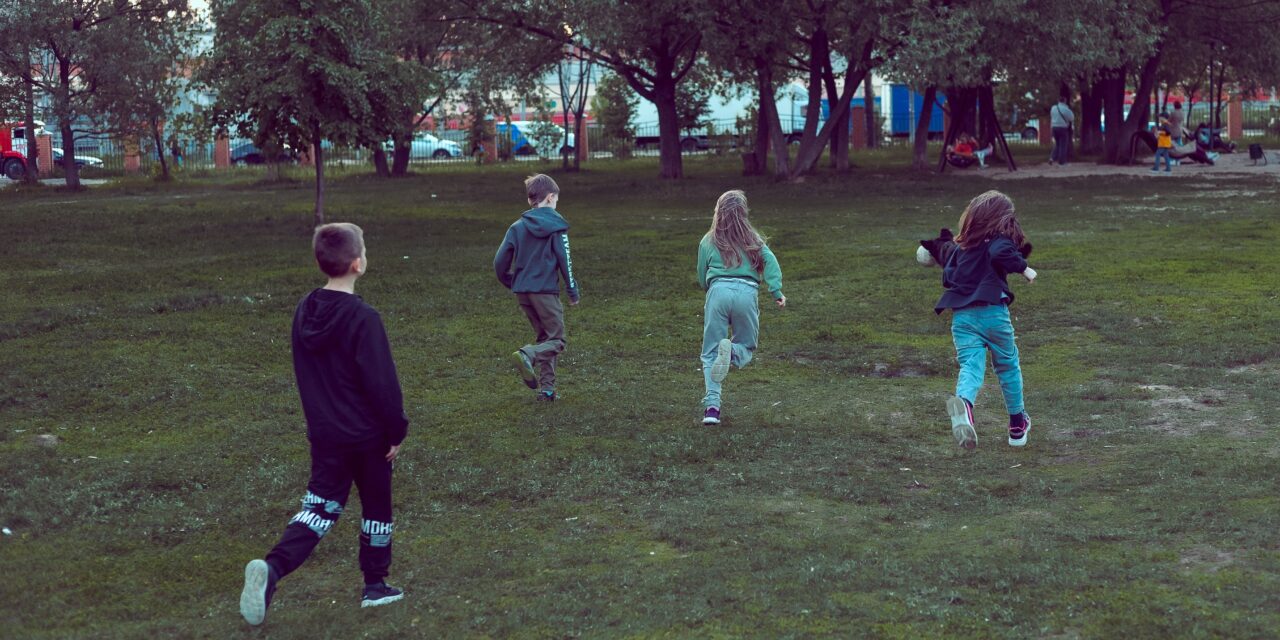
As an elder millennial, I remember running around outside until my mom called me in. All day. No breaks.
That was conditioning at its finest.
My husband can remember even more extreme conditioning as a kid. As a Gen Xer, he would finish up a football game just to come home and shoot baskets with a friend in his driveway for another few hours. Or he would ride his bike seemingly forever to play a pickup game just to ride back uphill the whole way.
I don’t know about your kiddos, but mine couldn’t hang with that level of exertion all the time. Not without some ramp up. They aren’t used to the amount of activity that a free-range childhood demanded of us.
This isn’t a new trend either. It’s been heading in this direction for decades. Yet, somehow, I haven’t seen any studies taking this lack of conditioning into effect when it looks at sports injuries. I suppose it’s a tough variable to try to work with.
This brings me to my research question for this project: What if part of the rise in Tommy John surgeries is related to the fact that our kids are too domesticated and not getting the physical conditioning they need to prevent injury the way we did?
The Hole in the Market
The market gap that we have identified is big enough to drive a semi through.
Kids need somewhere to condition their bodies to the demands of being athletes these days.
Back in the day, we did it on our own. We walked or biked everywhere. We played games that never ended. We played on things we shouldn’t have (I’m looking at you construction zone). We wobbled, we got dirty, we sweat from every pore in our bodies, we fell down and got back up and walked it off so we didn’t get in trouble, some of us even died and walked it off (IYKYK).
Our kids? They are inside. We schedule play dates. We wait for practice or games. We push them outside whenever we can, but today there are many more reasons for kids to resist and for parents to give up trying to get their kids out the door.
The Great Indoors
We want our kids to be safe. But in so doing, we have made them less strong, less capable on their own, less willing to push through discomfort than previous generations.
Safety has come at a pretty high cost.
My biggest concern for this generation is their golden years. After they have been fully and properly domesticated and are working their own desk jobs (should AI not try to replace those), how much strength will they have left to go outside and have a catch with their kids? Will they even be able to do the things they need to do around the house without massive efforts?
My mind always travels to the gelatinous humans from the movie Wall-E when I think about this potential future. With so many of our kids playing Fortnite or Roblox or Minecraft like they are getting paid to play, are they setting themselves up for a profound lack of muscle tone the likes of which we have never really seen?
It feels like a public health threat that has not yet been truly understood. Most usually aren’t until the harsh reality is facing us. But by acting now, we could outrun the worst of the impacts.
Facing Reality
The harsh reality is that the VAST MAJORITY of baseball players will never play at the college level or even semi-professional ball. Let alone earn a scholarship to do it. So why then are so many families pouring so much time, energy, and money into travel baseball?
The simple answer is that they are being told that travel ball is the cure-all. Recommended for any of the following situations:
- Jayson is stuck at first base because no one can catch what he throws, he should find team mates that can play at his level.
- Ben didn’t make the high school team, he should get some extra innings in, and then he’ll be ready.
- John wants to pitch better, he needs to throw more pitches, travel ball will get him more innings than he could wish for.
Yet, the only situation that really should call for travel ball is the first. The latter two and any others you can think of need a different solution. Especially a pitcher or catcher trying to improve. They don’t need to take tired reps during long travel ball seasons to get better. They need focused reps that condition their bodies to be ready for those games. It’s also unlikely that any pitcher needs a tournament without pitch count limits and coaches that only care about winning (although I’m pleasantly surprised that more coaches are moving away from this, like this one here).
If you read my article on travel ball not being worth the expense, this is what I meant. Not that it isn’t worth the price for those that need to be getting to new competitors. Although, I do believe that accessibility matters and high costs only make things less accessible.
Conditioning isn’t Just More of the Same Reps
Properly conditioning the body for anything should be a multi-disciplinary approach. Occupational injuries become significantly more likely when we repeat the same motion with no differences over and over again. It happens on assembly lines, to folks typing all day long, and to kids pitching a million pitches without enough recovery time.
No matter the motion, doing it the same way without enough recovery or variety is a one-way ticket to injury. Early specialization is one of the root causes that has been identified as a driver of the Tommy John epidemic we are currently experiencing.
This is why I’m so glad that the online discourse about pitching development has started to include much more variety in the workouts. It’s not just throwing a baseball. There are so many other ways to keep muscles strong and continue to refine a player’s ability to throw at a target.
We’ll dig into this further in another article, but evidence shows that multi-sport athletes have an advantage over their specialized counterparts. That is due, at least partially, to the conditioning that they are keeping up through the other seasons. It’s also because of the analogous skills they are picking up from each discipline.
Travel baseball can encourage specialization in exactly the wrong players. The ones that really need more varied conditioning are not going to benefit from the grueling schedule of travel ball. This is why we are building something different. A facility that focuses on whole player growth. That factors their current conditioning levels into their recommended activities. That slows down enough to allow for recovery and other interests, not just baseball.
But to be crystal clear: this is all in the name of baseball. To stay healthier all year round so that we can continue to play and move. Even if we are playing flag football, we will be thinking of the baseball that we will able to get to when the time comes. Because baseball is right.